

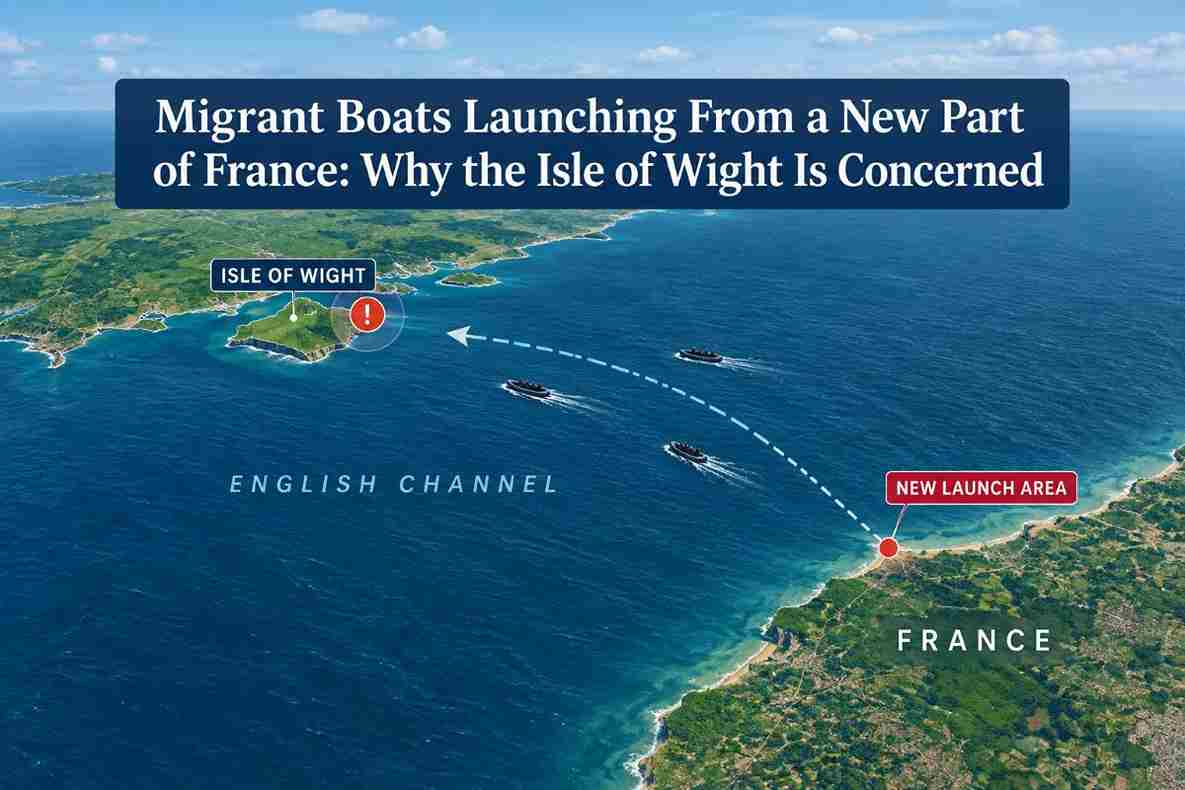
The prospect of small boats setting off for the UK from a different stretch of the French coast is raising questions about what happens next in the Channel. For the Isle of Wight, the concern is not simply about where migrants depart, but whether changing launch locations could affect maritime safety, rescue operations and the wider response to crossings.
Understanding the issue means separating what a change in departure points could mean from what it actually proves about migration routes, local risks and the likelihood of boats reaching British shores.
What’s actually true: the Channel route is changing
The immediate concern follows a series of unusually long crossings from Normandy, including a departure from the Utah Beach area near Cherbourg earlier this month.
On 6 September, more than 150 people were intercepted in the Channel after a boat travelled from the Cherbourg area. RNLI crews from Bembridge and Yarmouth were involved in bringing people ashore at Eastney Beach, near Portsmouth.
A further incident on 21–22 September involved a boat believed to have departed near Caen. French authorities shadowed it, while RNLI lifeboats from Eastbourne and Hastings were sent to assist.
These incidents matter because Normandy is considerably further west than the familiar departure areas around Calais and Dunkirk. A longer journey means more time at sea, greater exposure to changing weather and currents, and potentially more complicated rescue operations.
However, a different departure point does not automatically establish that smugglers have permanently switched routes.
How this connects to the Isle of Wight
The Island’s location makes it relevant to Channel rescue operations, even when a boat is not heading directly towards its beaches.
The September crossing demonstrated how RNLI crews based on the Isle of Wight could be called upon to assist a vessel travelling towards Hampshire. The decision to bring those rescued ashore at Portsmouth also illustrated that the nearest coastline is not necessarily where people will be landed.
According to the Isle of Wight Council, the likelihood of migrant boats landing directly on the Island was considered extremely low following the September incident.
That distinction is important for residents. A rescue operation involving Island lifeboats does not mean the Island itself has become the destination.
The practical concern is whether repeated long-distance crossings could require more resources from maritime rescue services and affect their ability to respond to other emergencies.
Why longer routes raise safety concerns
Small inflatable boats carrying large numbers of passengers can be vulnerable to rough seas, engine failure and overcrowding.
Longer crossings can increase exposure to these hazards. Passengers may face exhaustion, cold-water exposure and the risk of being stranded if a vessel becomes unmanageable.
The BBC has previously reported concerns from maritime experts about hypothermia risks associated with departures further along the French and Belgian coastline.
There is also a distinction between a rescue and a successful arrival. French and British maritime authorities may become involved well before a boat reaches the UK coast, and those interventions can change where passengers are taken.
Common misconceptions about the new route
Does this mean the Isle of Wight is becoming a regular landing point?
Not on the evidence of these incidents alone. Isle of Wight lifeboats assisting at sea does not establish a sustained pattern of direct landings on the Island.
Does a longer crossing mean authorities cannot stop the boats?
No. French authorities continue to conduct interceptions and disrupt launch attempts. The Home Office reported that French units prevented 185 small-boat crossing events between 27 April and 2 August 2026.
Does every person rescued automatically receive permission to stay in the UK?
No. Rescue at sea and immigration decisions are separate processes. People brought to the UK may undergo immigration and asylum procedures, with outcomes depending on their individual circumstances and the applicable rules.
What happens next — and what residents can do
The key question is whether departures from Normandy become a recurring pattern or remain isolated incidents.
Residents should look for confirmed information from the Isle of Wight Council, the Maritime and Coastguard Agency, the RNLI and Border Security Command rather than relying on unverified social media reports.
For anyone concerned about a vessel in distress, the appropriate response is to contact the Coastguard through 999 and ask for the Coastguard. Do not approach or attempt to intercept a small boat yourself; doing so could put people at further risk.